|
Licensed Practical Nurse, Diploma
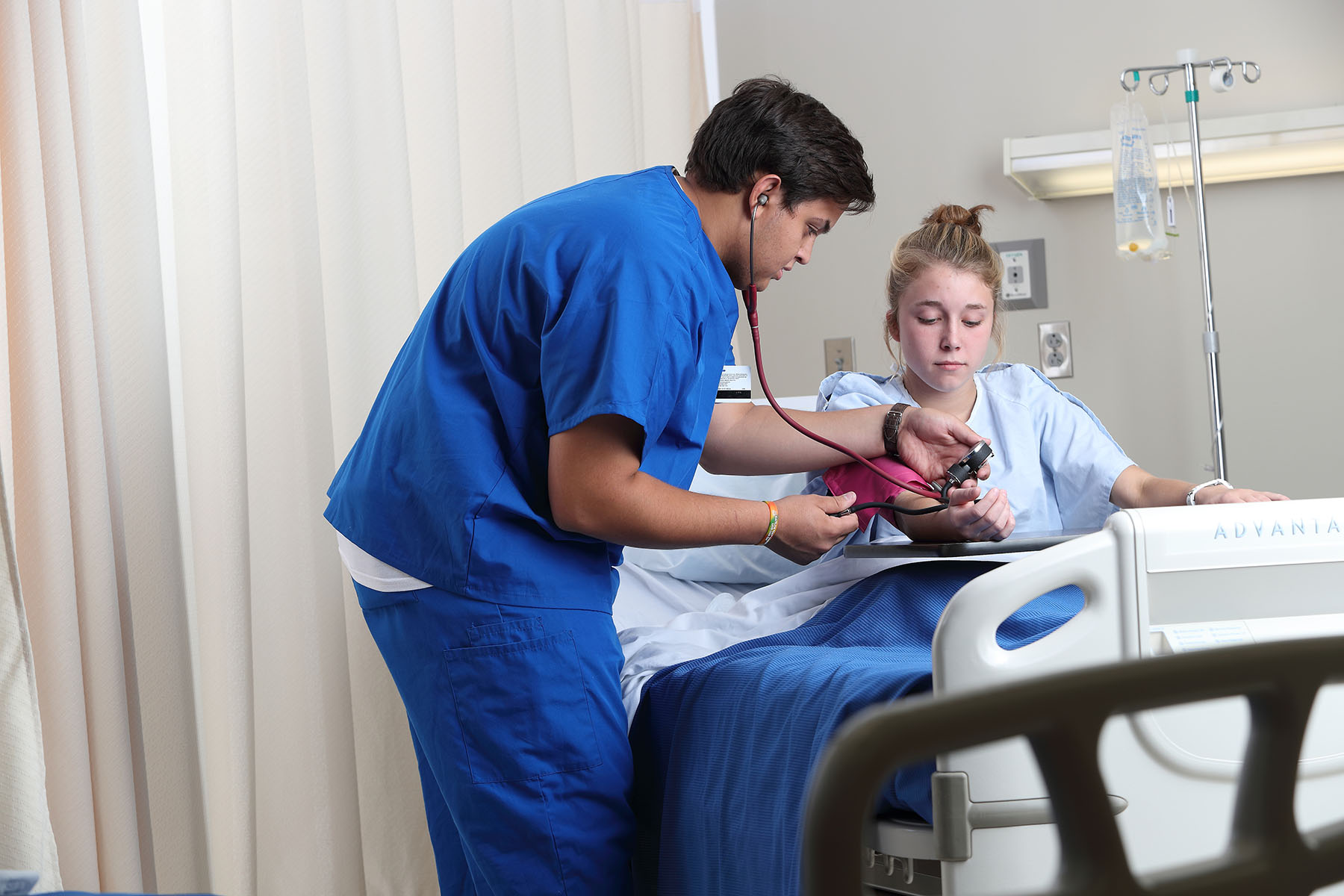
Licensed Practical Nurses (LPNs) are collaborative members of the health care team, working under the supervision of RNs and physicians. They provide direct patient care by assisting with activities of daily living, giving medications in various ways including injections and IVs, and performing many other cares necessary for patient treatment. LPNs work in many settings that provide a number of scheduling options, such as hospitals, long-term care, clinics, home healthcare, government and private facilities. Schedules may include evening, night and weekend shifts due to the nature of the cares provided. LPNs are an essential part of the health care team and have a positive influence in the lives of clients.
Clinical placement is determined only after the student has been observed safely and consistently performing all required procedures in specified time frames.
|
|
|
Semester |
Course Title |
|
|
|
|
Summer Session I
|
|
|
CPR Certification |
0 |
The American Heart Association designed the BLS for Healthcare Providers Course to prepare a wide variety of healthcare professionals to recognize several life-threatening emergencies and to provide CPR, use an AED, and relieve choking in a safe, timely, and effective manner. The course includes adult, child, and infant rescue skills in both the out-of-hospital and in-hospital settings. |
|
|
Composition |
3 |
English Composition will help develop proficiency in writing concise, coherent essays, and in using correct English. Several modes of discourse will be explored and good grammar skills are required. This course will improve the student's critical thinking skills as it provides students with practice in all stages of the writing process: planning, supporting, rewriting, analyzing, proofreading, and editing. This course will also require critical reading and writing. Prerequisite: Placement Assessment |
|
|
Math for Medications |
1 |
This one credit course is designed to teach students the calculation skills needed to safely practice in the healthcare profession. |
|
|
College Math |
3 |
A course covering the concepts and applications of mathematics, that includes: the arithmetic order of operations, percent problems, descriptive statistics and graphing, algebraic manipulations, solving linear equations, formula rearrangement, word problems, measurement, and applied plane and solid geometry. This course satisfies the institution's general education requirements for mathematics, but is not a transfer course. Prerequisite: Placement Assessment |
|
|
General Psychology |
3 |
Provides the student with an introduction to the basic psychological processes underlying human behavior. Topics include the functions of the brain amd nervous system, the characteristics of sensation, perception and altered states of consciousness, learning and memory, the nature of thinking skills and intelligence, theories of motivation, emotion and personality, a survey of psychological disorders and approaches to therapy, social/interpersonal relations, and practical applications. |
|
|
|
First Semester
|
|
|
Computer Essentials |
2 |
Designed to enable students with little or no computer experience to acquire a basic understanding of the personal computer. This course involves the study of computer basics such as hardware, operating systems, and file management, using the Internet for research, word processing, and spreadsheets. |
|
HC 118
HC 118 |
Applied Anatomy/Physiology |
4 |
Forms the foundation for Licensed Practical Nursing and Surgical Technology programs. In addition to studying the structure and function of the human body, medical terminology and disease processes that correlate with each body system will be covered. |
| HC 118L |
Applied Anatomy/Physiology Lab |
|
| HC 117 |
Medical Terminology |
1 |
|
|
Nursing as a Profession |
1 |
This course will introduce the LPN student to the nursing process, professionalism, and historical events in nursing. Strategies for success in learning will also be explored, including different learning styles, critical thinking skills, time management, and learning resources for the student. The performance expectations for students in the STI lecture, lab, and clinical courses will also be discussed. |
|
|
Introduction to Nursing |
4 |
Introduces students to the foundations of nursing that can be used throughout their careers. Students will be introduced to the nature of nursing, personal and environmental health, developmental stages of the life cycle, nutrition, the nursing process, safety in the health care setting and client care. Also provides an overview of basic pharmacology. Students will learn the administration of medication with concern for safety and precision and attention to important physiologic factors. Emphasizes understanding of drug action at the physiologic level. The pharmacology content will be integrated with knowledge of anatomy, physiology, and disease processes. The nursing process, as well as patient teaching, is also stressed in this course to maximize the potential of reaching the therapeutic goal. The Introduction to Nursing lab is a vital part of the LPN student's education in which skills are demonstrated, practiced, and tested (performed). |
|
|
Nursing Procedures |
5 |
Students will understand the concepts of assessing health status, diagnostic tests and specimen collection, as well as meeting basic physiologic needs of patients through management of fluid and electrolyte balance, meeting basic nutrition needs through diet therapy and assisted feedings, assisting with respiration and oxygen delivery, promoting urinary elimination, promoting bowel elimination and promoting sleep and comfort. Students will continue to master medication administration and IV therapy as introduced in Pharmacology for Nursing. Students will be introduced to care of the surgical and immobile patient, providing wound care and treating pressure ulcers, and promoting musculoskeletal function. During the lab portion of the course, students will learn more advanced patient care techniques. Students will also spend 8 hours per week in clinical experiences as part of the lab portion. Prerequisite: LPN 101 |
|
|
|
Second Semester
|
|
|
Maternity & Pediatric Nursing |
5 |
Introduces students to perspectives in maternal and child health nursing. Course focuses upon the nursing care throughout the childbearing process including emphasis on pregnancy, labor and birth, postpartum, and the newborn. In addition, the study of child health and childhood diseases from infancy through adolescence along with the child with special needs will be incorporated into the course. Students will spend clinical hours at health care facilities for the lab portion of this course. Prerequisite: first semester coursework |
|
|
Medical/Surgical Nursing |
6 |
Introduces students to the basic concept of Medical-Surgical Nursing: oxygenation and perfusion, body defenses, control, mobility, coordination and regulation, digestion and elimination, reproductive and sexual disorders, physical and mental integrity, special areas, and integration of body systems. Students will spend clinical hours at health care facilities for the lab portion of this course. Prerequisite: first semester coursework |
|
|
Geriatric Nursing |
4 |
Designed to provide a knowledge base for Licensed Practical Nursing students in the care of geriatric patients. The content is based on nursing diagnoses, outcomes and interventions for elderly persons. Topics related to older adults that are covered include health management, nutrition, elimination, activity and rest, cognitive patterns, self-concept, role relationships, sexuality, coping and value systems. Classroom lecture will be enhanced with clinical experiences related to nursing care of the older adult. Prerequisite: first semester coursework |
| LPN 142 |
Advanced Pharmacology |
1 |
|
|
Responsibilities of the LPN |
1 |
Designed to discuss professional issues that will affect the Licensed Practical Nurse proceeding into the workplace. Covers such topics as the history of nursing as a profession, legal and ethical issues in the workplace, communication in the workplace and resumé and interviewing tips for success in getting a desired job. Discusses various health care settings, as well as the leadership and management roles of the Licensed Practical Nurse within those settings. Prerequisite: first semester coursework |
|
|
|
Summer Session II
|
|
|
Clinical Practice |
5 |
Students work with a preceptor at a clinical site and work with an LPN or RN. Clinical hours are a required part of the clinical experience prior to receiving the diploma for completion of the program. Prerequisites: all first and second semester coursework and permission of Program Chair |
|
|
NCLEX Review |
1 |
A review course to prepare students to take the board examination required to practice as an LPN. Students will review all previous course contents, as well as practice test-taking skills. Prerequisites: all first and second semester coursework and Permission of Program Chair |
|
|
|
|
|
|